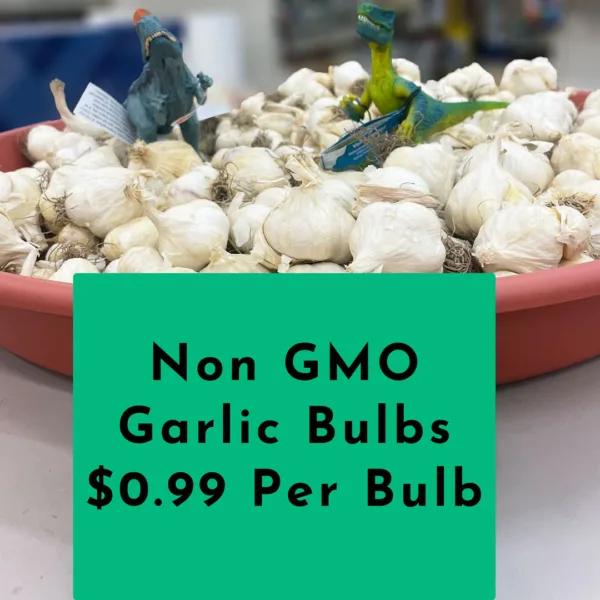
Non GMO Garlic Bulbs
Non GMO Garlic Bulbs For Sale
Non GMO Garlic Bulbs are now available for purchase in the garden center of King Feed in Canyon Lake, Texas.. Non GMO simply means that the plant has not been genetically engineered at all. Hurry before we sell out of these delicious perennials. Garlic is a widely used herb and vegetable in cooking due to its pungent flavor and numerous potential health benefits. Did you know that garlic can boost the immune system thanks to all the antioxidant, antibacterial and anti-inflammatory properties of the perennial. Plus, growing your own garlic tastes so much more delicious than buying it from the store. To grow garlic, individual cloves are planted in the fall, ideally a few weeks before the first frost. The bulbs are harvested in late spring or early summer once the leaves turn brown and start to dry out. Garlic bulbs should be cured (dried) for a few weeks after harvest before storage. The pungent flavor of garlic is essential to the cuisines of many cultures. Large-plump bulbs have papery skins and plenty of creamy-white cloves. Harvest in mid-summer when the leaves begin to yellow.
King Feed Garden and Nursery – Canyon Lake, Texas
- Description
Description
About Garlic Bulbs
Garlic bulbs are the underground storage structures of the garlic plant (Allium sativum). Garlic is a widely used herb and vegetable in cooking due to its pungent flavor and numerous potential health benefits. Here is some information about garlic bulbs:
- Botanical Characteristics: Garlic bulbs are part of the Allium genus, which also includes onions, leeks, and chives. The garlic plant typically grows up to 2 feet in height and consists of long, slender leaves, a central flower stalk, and a cluster of bulbils.
- Bulb Formation: Garlic is a perennial plant, but it’s typically grown as an annual. The bulb is formed beneath the soil, and it consists of multiple cloves, which are individually enclosed in a papery covering. Each clove can grow into a new garlic plant if planted.
- Varieties: There are various garlic varieties, which can be broadly categorized into two main types: hardneck garlic and softneck garlic. Hardneck garlic typically produces fewer, but larger cloves and tends to be hardier in colder climates. Softneck garlic produces smaller cloves but stores well and is often preferred for braiding.
- Flavor and Aroma: Garlic has a strong, pungent flavor and aroma, which can range from mild to intensely spicy depending on the variety and how it’s prepared. The characteristic flavor comes from sulfur compounds in the cloves, particularly allicin.
- Culinary Uses: Garlic is used in a wide range of culinary dishes around the world. It’s added to soups, stews, sauces, and marinades to enhance flavor. It can be roasted, sautéed, minced, or used whole, depending on the desired flavor intensity. Garlic is a key ingredient in many cuisines, including Italian, Asian, and Mediterranean.
- Health Benefits: Garlic has been associated with several potential health benefits. It is believed to have antibacterial, antifungal, and antiviral properties. Some studies suggest that regular consumption of garlic may help lower blood pressure, reduce the risk of heart disease, and boost the immune system. However, it’s essential to consult with a healthcare professional before using garlic as a remedy for specific health issues.
- Planting and Harvesting: To grow garlic, individual cloves are planted in the fall, ideally a few weeks before the first frost. The bulbs are harvested in late spring or early summer once the leaves turn brown and start to dry out. Garlic bulbs should be cured (dried) for a few weeks after harvest before storage.
- Storage: Garlic bulbs can be stored for several months under proper conditions. It’s essential to keep them in a cool, dry place, away from direct sunlight, to prevent sprouting.
- Traditional and Folklore Uses: Garlic has a long history of use in traditional medicine and folklore for its potential health benefits, including as a remedy for colds, infections, and warding off evil spirits or vampires.
- Culinary Variations: There are various garlic products and preparations, including garlic powder, garlic salt, and garlic-infused oils and vinegars, which can be used to add garlic flavor to dishes more conveniently.
Garlic is a versatile and flavorful ingredient used in a wide range of culinary dishes, and its potential health benefits make it a valuable addition to a healthy diet. It has a rich history and remains a popular and important component of many world cuisines.